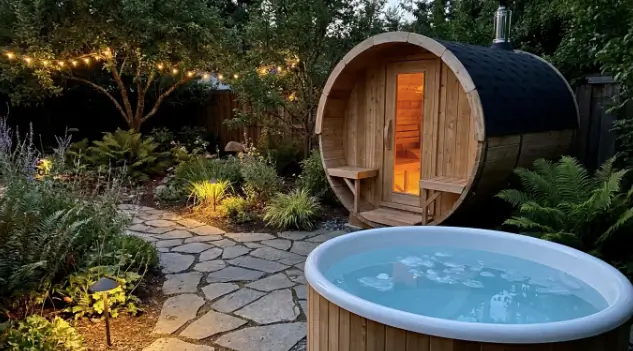
The right sauna kit size is set by three numbers: the typical number of people using it per session, the available floor footprint, and the ceiling height, since heater sizing tracks cubic footage rather than square footage. A household of two is usually best served by a three or four-person kit rather than an exact two-person model, and a standard 76 to 80 inch ceiling keeps the heater requirement predictable. Getting this wrong in either direction, too small or too large, is the single biggest reason a sauna kit ends up used less than planned.
Why Does Sauna Kit Size Actually Matter?
Size affects three things at once: how many people fit comfortably, how fast the cabin reaches temperature, and how much the heater costs to run per session. A kit sized exactly to the household’s daily headcount feels cramped the moment a guest joins, while a kit sized generously beyond actual use takes longer to heat and runs the heater harder for a room that is mostly empty air. The goal is matching the kit to realistic weekly use, not to the largest number the budget can stretch to.
How Many People Should the Kit Realistically Fit?
A two-person kit, typically around 4 by 4 feet of interior floor space, fits two adults seated but leaves little room to lie back or stretch legs on the bench. A three to four-person kit, closer to 5 by 6 feet, is the size most home buyers end up preferring even for a household of two, since it accommodates the occasional guest and allows one person to use the lower bench while another uses the upper tier without crowding. Sizing one notch above the household’s typical headcount is a better rule than sizing exactly to it.
How Does Household Composition Change the Sizing Decision?
A household that mostly uses the sauna solo or in pairs has different needs than one that regularly hosts friends for a group session, even if both households technically number two people day to day. Think through the realistic weekly pattern rather than the household headcount alone: a couple who frequently invites neighbors over benefits from sizing a notch up compared with a couple who only ever uses the kit together. Growing families are worth planning for too, since a kit sized for two young children today may feel tight in five years once those children are teenagers taking up adult-sized bench space.
What Happens When a Kit Is Undersized for the Space?
An undersized kit heats fast, which sounds like an advantage, but it also means less usable bench space and a session that feels rushed with more than one person inside. Benches too shallow to lie down on shorten how long a session comfortably lasts, and a ceiling under 76 inches puts taller adults in an uncomfortable stooped position near the door. Undersizing is the more common mistake among first-time buyers chasing the lowest price point on the smallest listed kit.
What Happens When a Kit Is Oversized for the Room?
A kit sized well beyond actual household use takes measurably longer to reach target temperature, since the heater is conditioning more cubic footage than a well-matched unit, and the electric bill per session climbs accordingly. Oversized kits also eat more floor space than many buyers account for when measuring the install site, particularly with an outdoor kit that needs clearance on all sides for maintenance access and rain runoff. sweatdecks.com lists interior dimensions and recommended heater kilowatts side by side on each kit’s product page, which is the fastest way to check whether a given model actually matches a specific room before ordering rather than after delivery.
How Does Ceiling Height Change the Sizing Math?
Heat rises and pools near the ceiling first, so a taller cabin increases the cubic footage a heater has to bring up to temperature even when the floor footprint is unchanged. Standard kit ceilings sit at 76 to 80 inches for exactly this reason, tall enough for comfortable standing but not so tall that the heater has to fight extra dead air overhead. A custom-built taller ceiling, sometimes requested for a converted room with existing high ceilings, needs a proportionally larger heater or the top of the cabin never reaches the same temperature as the bench level, which is where the thermometer should actually be read from.
How Should You Measure the Install Space Before Ordering?
Measure twice with a tape measure rather than estimating by eye, since a kit’s listed exterior footprint includes wall thickness that eats into usable interior space, and buyers frequently forget to account for it. For an outdoor kit, measure clearance on all four sides too, not just the footprint, since most kits need at least a foot of clearance for maintenance access, rain runoff, and code-required distance from a fence or property line depending on local rules. Indoor installs need to account for door swing into an adjoining hallway or room, and for ceiling height at the specific spot the kit will sit, since older homes sometimes have slightly uneven ceiling heights across a single room.Write down the exact numbers before comparing kit listings, since a kit that looks like a comfortable fit in a photo can be a tight squeeze once wall thickness and clearance are subtracted from the room’s raw dimensions.
What Does Regular Sauna Use Appear to Be Associated With?
Correct sizing matters partly because a kit that heats quickly and comfortably gets used more often, and the research on sauna bathing is built around frequency of use. A 2018 review in Mayo Clinic Proceedings summarized cardiovascular associations reported among people using a sauna multiple times a week, including favorable effects on vascular function. A separate systematic review in Evidence-Based Complementary and Alternative Medicine reported comparable associations tied to regular dry sauna bathing. A 2023 follow-up review in Mayo Clinic Proceedings looked at Finnish sauna bathing alongside other lifestyle factors and reported consistent associations with favorable cardiovascular outcomes among frequent users. These remain population-level associations, not causal proof for any one household, and none of the studies address kit sizing specifically, but they underscore why a kit that is comfortable enough to use several times a week is worth more than one that is merely the largest available.
Frequently Asked Questions
What size sauna kit fits two people comfortably? A kit with roughly 4 by 5 feet of interior floor space and a 76 to 80 inch ceiling comfortably seats two adults with room for a lower and upper bench tier.
How much bigger should a sauna kit be than the number of regular users? Sizing for one more person than the household’s typical group avoids the cabin feeling cramped on the nights everyone wants to use it.
Does ceiling height affect sauna kit sizing? Yes. Heat rises, so a taller ceiling increases the cubic footage the heater has to condition even with the same floor footprint.
Is a bigger sauna kit always better? No. An oversized kit for one or two people takes longer to heat and costs more per session, and often sits underused as a result.
References
- Cardiovascular and Other Health Benefits of Sauna Bathing: A Review of the Evidence, Mayo Clinic Proceedings, 2018
- Clinical Effects of Regular Dry Sauna Bathing: A Systematic Review, Evidence-Based Complementary and Alternative Medicine, 2018
- Does the Combination of Finnish Sauna Bathing and Other Lifestyle Factors Confer Additional Health Benefits? A Review of the Evidence, Mayo Clinic Proceedings, 2023
By Paige Donnelly